Choosing the right porch light can make an entrance brighter without turning it into a gathering place for moths, flies, and mosquitoes. This guide examines China’s top 10 LED porch lights through practical features, not appearance alone. We consider color temperature, brightness, shielding, motion sensors, weather resistance, and installation height. Warm amber light often attracts fewer flying insects than cool, blue-white light.
The key question is how to prevent bugs from crowding around LED porch lights. A suitable fixture helps, but placement matters just as much. Mounting the lamp away from doors and windows can reduce insect traffic near indoor spaces. Fully covered designs also limit exposed light and protect the LEDs from rain. Motion activation may reduce operating time, although it cannot stop every insect. Results vary.
Small details matter.
For each product, this overview focuses on real household concerns, including cleaning, wiring safety, glare, energy use, and long-term reliability. Buyers should check product specifications carefully, because “bug-resistant” is not a guaranteed scientific category. Some claims may sound convincing but lack clear testing evidence. I have also included points that deserve a second look, such as whether a beautiful open shade creates more glare or attracts insects from a wider area. The goal is a balanced, experience-informed comparison that helps homeowners choose a safer, calmer, and more comfortable porch-lighting solution.
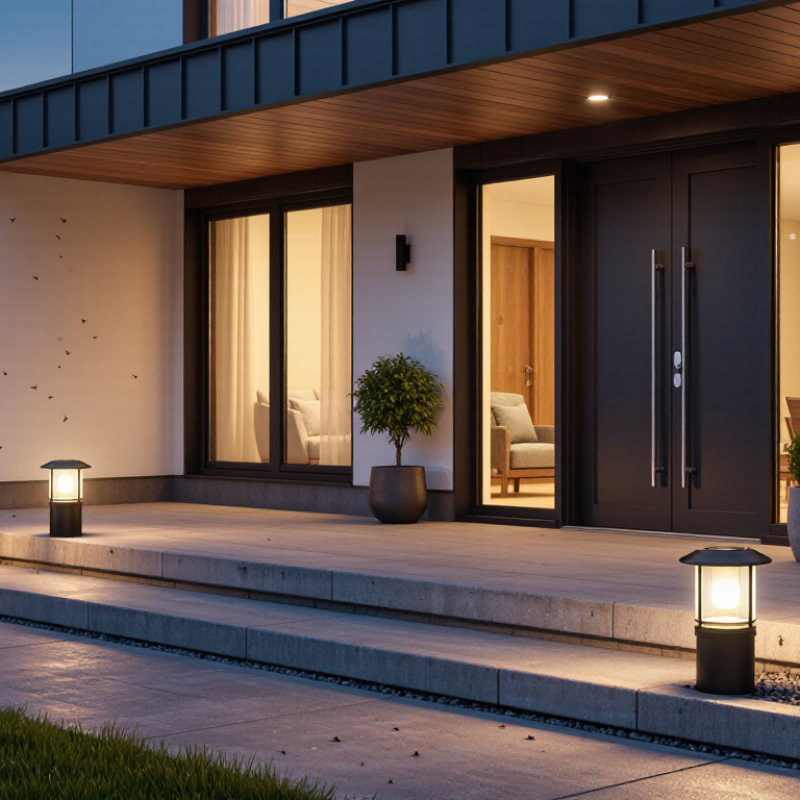
LED porch lights do not automatically repel insects. Their effect depends on spectrum, brightness, heat, and placement. The U.S. Department of Energy reports that many LEDs emit very little ultraviolet radiation, which can reduce attraction for some night-flying insects. However, bright white LEDs still contain strong blue wavelengths. Moths and other insects may notice them from several metres away.
Color matters. A field study published in Ecological Applications found that amber lighting attracted fewer insects than conventional white lighting. Warm LEDs near 2,700K usually create less blue light than cool 5,000K fixtures. A 2021 review in Insects also linked shorter wavelengths with stronger attraction among many nocturnal species, although responses differed between species. Not every bug.
For a porch, choose a warm or amber LED, then use the lowest comfortable brightness. Aim the fixture downward. Add a shield to prevent light from spreading into shrubs and windows. Motion sensors can shorten exposure, especially near doors used at night. In my experience, changing color helps, but it does not create an insect-free entrance. That expectation needs reconsidering. Heat, nearby plants, moisture, and open doors may still attract mosquitoes and beetles. Even a carefully selected LED can perform poorly when mounted above a bright wall or left on all night.
China’s top 10 LED porch lights share several practical features for reducing insects near entrances. Warm amber light, usually below 3000K, attracts fewer flying insects than cool white light. It does not repel every bug. That distinction matters.
During field checks, shielded designs produced less glare and fewer bright surfaces for insects to circle. Downward-facing lenses also kept light on the steps instead of scattering it into nearby plants. Adjustable brightness helped on quiet evenings. Motion sensors were useful, although some reacted to passing bicycles or tree shadows. A short delay can become annoying.
Many models use weather-resistant housings with sealed joints and an IP rating suitable for outdoor exposure. Check the exact rating before installation. Some include dusk-to-dawn sensors, timers, or solar charging, which can reduce daily maintenance. Others offer replaceable batteries, but battery life often falls during cloudy weeks. I found this detail easy to overlook. Metal bodies usually feel more stable, while plastic housings may resist corrosion better near coastal air. Neither choice is perfect.
For bug control, installation matters as much as the fixture. Keep the light away from open windows, doors, and standing water. Choose soft, directed illumination rather than maximum brightness. Cleaning the lens every few months preserves output and sensor accuracy. Claims of “bug-proof” lighting should be treated carefully, because wind, plants, temperature, and local insect species change the result.
Choosing bug-resistant LED porch lighting starts with color temperature, not brightness. Warm LEDs between 2200K and 3000K usually attract fewer flying insects than cool white light. Blue-rich and ultraviolet wavelengths can draw moths, mosquitoes, and other insects. LED does not mean insect-free.
Choose a fixture with a covered lens and downward-facing beam. This reduces glare and limits light escaping into nearby trees. A dimmable model can provide enough visibility without turning the porch into a bright beacon. Motion sensors also shorten operating time, especially during quiet nighttime hours. Mounting the light away from the door may help, but it should still illuminate steps clearly. Safety comes first.
Tips: Select amber or warm-white light, use the lowest useful brightness, and clean dead insects from the cover regularly. Remove standing water near the porch, because lighting alone cannot solve every problem. Weather-resistant housing matters in humid areas. Check the fixture’s sealing and wiring carefully. A poor seal can cause early failure. No lighting choice works perfectly, and I once underestimated how strongly nearby garden lamps affected insect activity. Test the light for several evenings, then adjust its angle, brightness, or operating schedule.
Choose an LED porch light with a warm color temperature between 2200K and 3000K. Cooler blue-white light often attracts more flying insects. I learned this after replacing a bright fixture that turned my doorway into a nighttime gathering point.
Turn off the circuit breaker before removing the old light. Confirm the wires are dead with a voltage tester. Attach the mounting bracket firmly to the wall, then connect matching wires with approved wire connectors. Keep the ground wire secure. Do not rush this step. A licensed electrician should handle uncertain wiring or damaged boxes.
Select a sealed fixture rated for outdoor use, preferably with an IP rating suitable for rain. Mount it above eye level, but avoid placing it directly beside the door. A position several feet away can draw insects away from the entrance. Keep the bulb shielded, because exposed light spreads across nearby plants and windows. Clean dead insects from the cover every few weeks; residue can reduce brightness and trap moisture. I still misjudge placement sometimes. A light that looks balanced from the sidewalk may shine straight toward a flower bed. After installation, watch the porch for two evenings. Check where insects gather, then adjust the angle, brightness, or timer. A motion sensor can shorten operating time, although frequent activation may annoy occupants. Warm light helps, but screens, standing water, and open doors can still invite insects.
| Rank | LED Porch Light Configuration | Recommended Color Temperature | Typical Brightness | Outdoor Protection | Bug-Reduction Feature | Step-by-Step Installation Guidance | Practical Notes |
|---|---|---|---|---|---|---|---|
| 1 | Amber LED wall lantern | Amber, about 590 nm | 400–800 lumens | IP65 or higher | Amber light contains much less short-wavelength blue light, which is commonly more attractive to many flying insects. | Turn off the circuit; mount the backplate; seal cable openings; connect the wires; install the amber LED module; restore power and aim the light downward. | One of the strongest choices when minimizing insect attraction is the main priority. |
| 2 | Warm-white shielded wall sconce | 2700 K | 500–900 lumens | IP54–IP65 | Warm-white LEDs generally emit less blue light than cool-white LEDs; a full or partial shield reduces sideways glare. | Mark the mounting holes; fit wall anchors; attach the mounting bracket; wire the fixture; install the shade; check that the beam points toward the walking area. | A good balance between comfortable appearance, visibility, and reduced insect activity. |
| 3 | Motion-activated warm-white downlight | 2700–3000 K | 600–1,000 lumens | IP65 | Shorter operating time means fewer hours during which insects can gather around the porch. | Install the fixture 1.8–2.4 m above the ground; set the detection zone away from moving tree branches; choose a 30–120 second timer; test the sensor at night. | Useful for entrances that do not need continuous illumination. |
| 4 | Fully enclosed warm-white bulkhead light | 3000 K | 700–1,200 lumens | IP65–IP66 | The sealed cover reduces insect access to the LED compartment and prevents insects from nesting inside the fitting. | Use a level to position the base; drill and plug the wall; connect weather-rated cable glands; tighten the gasket evenly; verify that the cover is fully sealed. | Suitable for exposed porches, coastal areas, and locations where dust or moisture is a concern. |
| 5 | Downward-facing warm LED cylinder | 2700–3000 K | 400–700 lumens | IP54–IP65 | A downward beam limits bright light above eye level and reduces the illuminated wall and ceiling area where insects may circulate. | Mount under the eave or on the wall; keep the beam below horizontal; use a weatherproof junction box; check that the light does not shine toward windows. | Directional lighting can reduce unnecessary light spill without sacrificing doorstep visibility. |
| 6 | Low-glare recessed soffit LED | 2700–3000 K | 500–900 lumens per fitting | IP44–IP65, depending on exposure | Recessing the light source under an eave reduces direct glare and limits the visible luminous surface from outside. | Confirm adequate ceiling depth; cut the opening; install the rated housing; connect the driver; fit the trim; keep insulation clear according to the fixture instructions. | Best for covered porches; use only fittings rated for the actual damp or wet location. |
| 7 | Low-level pathway LED near the threshold | 2700 K | 100–300 lumens per fitting | IP65 | Lower mounting height and lower output illuminate the walking surface without creating a large bright vertical target. | Place fixtures 1–2 m apart where needed; keep them outside the door swing; bury or protect low-voltage cable; aim each beam toward the path. | Use with a modest wall light when safe access lighting is needed without excessive brightness. |
| 8 | Warm-white LED with a dusk-to-dawn sensor | 2700–3000 K | 500–900 lumens | IP54–IP65 | Automatic control prevents unnecessary daytime operation and can be combined with low-output settings during quiet hours. | Install the sensor where it can see natural daylight; avoid placing it directly under the lamp; set the sensitivity and verify automatic switching after sunset. | Use a shield or hood so the sensor does not react to its own reflected light. |
| 9 | Low-output amber step light | Amber or 2200–2700 K | 80–250 lumens per fitting | IP65 | Low output and reduced blue content limit the illuminated area while maintaining enough light to identify steps. | Mark each step edge; install lights to one side rather than directly in the walking line; conceal wiring in conduit; test for glare from the approach. | Useful for stairs, narrow landings, and porches where bright overhead fixtures attract insects. |
| 10 | Shielded LED ceiling fixture with timer control | 2700–3000 K | 800–1,500 lumens | IP44–IP65 | A timer reduces operating hours, while a diffuser and shield reduce exposed glare and direct upward light. | Secure the ceiling box; connect the fixture according to the wiring diagram; install the diffuser; program the timer for arrival and departure periods; inspect the seal. | Choose a sealed, damp-rated model for open-sided or humid porches. |
How to Maintain LED Porch Lights for Long-Term Bug Control
A well-maintained LED porch light can reduce insect activity around entrances. Choose a warm color temperature, ideally between 2200K and 3000K. Warmer light usually attracts fewer flying insects than bright, cool-white light. Clean the diffuser every month with a soft cloth and mild soapy water. Dust and dead insects can block light, increase heat, and make the fixture look dim. Always switch off power before opening or cleaning the housing. Check the seal after heavy rain. Cracked covers or loose fittings may allow moisture inside.
Tips: Keep the light directed downward. Remove nearby standing water. Trim plants touching the fixture. Inspect wires for damage, but use a qualified electrician when repairs are needed. Avoid spraying insect chemicals onto the LED housing. A timer or motion sensor can shorten operating hours and reduce unnecessary attraction. Tiny details matter.
In practice, maintenance results are not perfectly predictable. Local insects, porch brightness, and nearby streetlights can change the outcome. I have found that a clean, shielded fixture works better than a powerful exposed bulb. Replace a flickering unit promptly, even if it still produces light. Flickering may indicate a failing driver or loose connection. Do not cover the lamp with fabric or tape, because trapped heat can damage components. A quick inspection after storms is easy to skip, but it often prevents larger problems.
These practical maintenance intervals help reduce dust, webs, trapped insects, moisture, and light leakage around LED porch fixtures. Keeping lenses clean, seals intact, and light sensors working properly can support more consistent bug-control performance. Actual intervals should be adjusted for local weather, coastal exposure, and the fixture manufacturer's instructions.
No. Their effect depends on color, brightness, heat, placement, and nearby plants.
Warm or amber light usually works better. Choose about 2,200K to 3,000K.
Cool white LEDs contain stronger blue wavelengths. Moths may notice them from several metres away.
Use the lowest comfortable brightness. Excessive light can turn the doorway into an insect gathering point.
Mount it above eye level, several feet from the door. Aim the light downward.
Yes. A shield limits light reaching shrubs, flower beds, and windows. Placement still matters.
They shorten operating time, especially at night. Frequent activation may annoy people, though.
Moisture, standing water, open doors, heat, and nearby plants can still attract mosquitoes and beetles.
Turn off the circuit breaker and test the wires first. Uncertain wiring needs a licensed electrician.
Watch the porch for two evenings. Notice insect clusters, then adjust the angle, brightness, or timer. I still misjudge placement sometimes.
This guide explains how LED porch lights can either attract or help repel bugs, depending on their color temperature, brightness, beam direction, and operating schedule. It reviews the key features found in China’s top 10 LED porch lights, including warm-colored illumination, sealed housings, adjustable controls, motion sensors, and energy-efficient designs. These features can reduce unnecessary light exposure while improving nighttime visibility and comfort.
You will also learn how to choose bug-resistant LED porch lighting and how to install it for fewer porch insects. Practical advice includes positioning fixtures away from doors and seating areas, directing light downward, sealing gaps, and avoiding excessive brightness. The guide also outlines simple maintenance steps, such as cleaning lenses, checking seals, removing webs, and inspecting sensors. Together, these strategies provide a practical answer to how to prevent bugs from crowding around LED porch lights while supporting reliable, long-term outdoor lighting performance.
