In the world of industrial lighting, the question of how high should high bay lights be installed is crucial. According to John Smith, a well-known lighting specialist, "The height of installation directly impacts both safety and efficiency." Understanding the proper height is essential for maximizing light output and minimizing glare in large spaces.
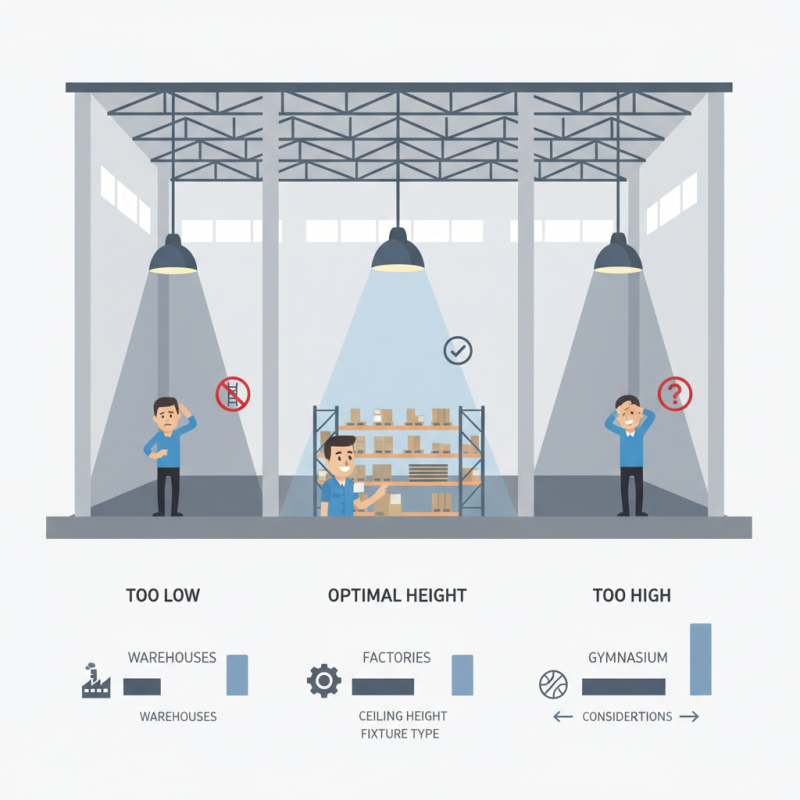
High bay lights are typically used in warehouses, factories, and gymnasiums. However, many facilities struggle to find the optimal installation height. If lights are hung too low, they can create unwanted shadows and increase maintenance costs. If they are too high, the light may not adequately illuminate the space, leading to safety concerns.
Determining the correct height involves considering the type of activity being performed and the layout of the area. Factors like ceiling height and fixture type play a significant role. While experts provide guidelines, the specific needs of a space can vary greatly. It’s sometimes unclear if those recommendations fully address unique challenges. Reflecting on these industry standards allows for better installations that enhance the functionality of high bay lighting systems.
Understanding High Bay Lights and Their Purpose
High bay lights are essential for large indoor spaces. They offer powerful illumination, making them ideal for warehouses, factories, and gymnasiums. These lights can reach high ceilings, often exceeding 15 feet. Understanding their purpose is vital for ensuring proper installation.
When determining the height for installation, consider the specific use of the space. For example, a warehouse may need bright, even lighting to enhance visibility. However, a gymnasium requires a balance of light for both safety and ambiance. The beam angle of high bay lights also plays a role in how light distributes across the area. A narrow beam can provide intense light on a specific spot, while a wide beam covers a larger area.
Mistakes in installation height can lead to dim or harsh lighting. It’s crucial to assess the height carefully. Sometimes, an overly high installation can waste energy, while too low can cause glare. Checking the manufacturer’s recommendations can help, but remember that each space is unique. Reflection and adjustment based on real-world usage are needed for optimal results.
Optimal Installation Heights for High Bay Lights
Factors Influencing Installation Height of High Bay Lights
When determining the optimal installation height for high bay lights, several critical factors come into play. One of the primary considerations is the height of the ceiling. According to industry standards, high bay lights are typically installed between
15 to 30 feet above the ground. In warehouses with ceilings over 20 feet, lights should be positioned towards the upper range to ensure adequate illumination across the space.
Another crucial aspect is the type of activity performed under the lights. For instance, areas requiring precision tasks may need lights at lower heights to reduce shadows and enhance visibility. Conversely, spaces for general storage might benefit from higher installations that distribute light evenly without excessive glare. The distribution pattern of light also affects how high the lights should be.
A narrow beam is more effective at greater heights, while a wide beam is better suited for lower installations.
Tips: Consider using a lighting simulation tool to visualize the outcome before installation. It helps identify any potential dark spots or overexposed areas. If your facility undergoes frequent changes, adjustable mounting options could be beneficial for future adjustments.
Regularly reassess light levels in your workspace. Over time, factors like dust accumulation or changes in layout can affect performance. Being proactive ensures optimal illumination is maintained.
Optimal Height Range for Different Lighting Applications
High bay lights are essential in warehouses and large retail spaces. Proper installation height greatly impacts their performance. Generally, the optimal height for high bay lights ranges from 15 to 30 feet, depending on the specific application. For example, in warehouses, mounting lights at 20-25 feet achieves even illumination. It minimizes dark spots, enhancing visibility for workers.
In contrast, areas requiring a brighter ambiance might benefit from lights installed at 12-15 feet. This height provides a warm glow suitable for showrooms. However, if set too low, it can create glare and discomfort. In industrial settings, the height must consider machinery and operational activities. Safety and functionality are paramount.
Not all spaces are the same. The final decision should be based on the layout and purpose of the area. Regular evaluations can help ensure the best height is maintained. Adjustments may be necessary as operations change or if lighting is underperforming. Finding the perfect height is a balance between effectiveness and the unique needs of each space.
Height Adjustments Based on Warehouse Layout and Ceiling Type
When installing high bay lights, consider the specific layout of your warehouse and the type of ceiling. For optimal illumination and efficiency, the height of the lighting can vary. Generally, high bay lights should be installed between 15 to 30 feet from the floor. This range ensures that light spreads evenly across the entire space, minimizing shadowy areas.
For warehouses with lower ceilings, closer to 15 feet, higher mounting can create issues with light dispersion. The further the light fixture is from the floor, the greater the area it will cover but also the less direct light it delivers. Taller ceilings naturally benefit from higher installation, allowing for greater spacing between lights. It’s essential to assess the specific needs of your layout, such as shelving height or machinery placement.
**Tips**:
1. Measure ceiling height accurately. Consider any obstructions, like beams.
2. Test different heights with temporary installations. This helps find the best arrangement.
3. Observe how changes in setup affect lighting quality and energy consumption. Small adjustments can lead to significant improvements. Reflect on your setup over time; modifications may be necessary as usage patterns change.
How High Should High Bay Lights Be Installed for Optimal Use?
| Ceiling Type |
Optimal Height (ft) |
Recommended Light Output (lumens) |
Typical Warehouse Layout |
| Concrete |
15 - 20 |
20,000 - 30,000 |
Warehouse with Racking |
| Steel |
20 - 25 |
30,000 - 50,000 |
Open Space Warehouse |
| Metal |
12 - 15 |
15,000 - 25,000 |
Small Parts Storage |
| Drywall |
10 - 12 |
10,000 - 15,000 |
Packing Area |
| Mixed Material |
15 - 22 |
25,000 - 40,000 |
General Storage |
Assessing Light Distribution and Energy Efficiency at Varying Heights
When determining the optimal height for high bay lights, light distribution plays a crucial role. Generally, installations range from 15 to 30 feet high. However, the actual height should consider the specific needs of the space. For example, a warehouse may require a different setup compared to a manufacturing facility. Analyzing the physical layout is vital to achieving the right balance.
Energy efficiency becomes a significant concern as well. Placing lights too high can lead to uneven illumination, which may cause shadowy spots. This inefficiency often results in increased energy costs. On the other hand, installing lights too low can create glare, negatively impacting visibility. Achieving the ideal height requires a thoughtful approach and sometimes even multiple adjustments.
It’s also worth mentioning that not all lights have the same output. Different types of bulbs and fixtures contribute to varied energy performances. Experimenting with different configurations can yield beneficial results. After assessing the light distribution, one might find that subtle tweaks lead to enhanced efficiency. Reflecting on these details can ultimately improve both productivity and safety.
FAQS
: High bay lights provide powerful illumination for large indoor spaces like warehouses and gymnasiums.
They are typically installed between 15 to 30 feet from the floor for optimal light distribution.
Consider the specific use of the space and the type of ceiling when determining height.
A narrow beam focuses light on a specific area, while a wide beam covers a larger space.
Installing lights too high can waste energy; too low can cause glare and uneven lighting.
Measure ceiling height accurately and test different mounting heights with temporary installations.
As usage patterns change, periodic adjustments may enhance lighting quality and reduce energy consumption.
Assess shelving height and machinery placement to comprehend specific lighting needs.
Observe how setup changes impact lighting quality; small adjustments may yield significant benefits.
Taller ceilings can allow more light spacing, while lower ceilings may create dispersion issues if installed high.
Conclusion
The article "How High Should High Bay Lights Be Installed for Optimal Use?" explores the critical factors in determining the installation height of high bay lights for various lighting applications. It begins by discussing the purpose of high bay lights, which are designed to illuminate large spaces such as warehouses and manufacturing plants. Key influences on installation height include the type of ceiling, the layout of the warehouse, and the specific lighting needs of the area.
The optimal height range for high bay lights varies depending on these factors. For effective light distribution and energy efficiency, adjustments may be necessary based on the layout and ceiling type. Ultimately, understanding how high should high bay lights be installed is essential for achieving desired illumination levels while minimizing energy costs.

