5 Tips Why Some LED Flood Lights Need a Driver?

Time:2026-09-24 Author:Liam
0%

A floodlight can look like one sealed unit, yet its LED chips may need carefully controlled current to work safely and consistently. That is why readers ask, “why do some LED flood lights require a driver?” The answer depends on the fixture’s design. Some models include a driver inside the housing; others use a separate unit. A driver converts incoming electrical power into the form the LEDs need, helping manage current, voltage, heat, and flicker. Small component, big responsibility.

For this introduction, “Maya Chen” is a fictional composite lighting engineer, not a real-world source. Her illustrative summary is: “An LED driver is the control point between the supply and the light; match it to the LED load.” The distinction matters. A mismatched driver can cause dimming, unstable output, shortened component life, or a floodlight that simply will not turn on. Still, a driver alone cannot guarantee good performance. Housing, ventilation, wiring, and installation conditions matter too.

This article outlines five practical reasons some LED flood lights need a driver, and why others appear not to. It looks at current regulation, power conversion, dimming, protection, and driver placement. Check the product label before replacing parts. Note the input range, output current, and wattage, then compare them with the manufacturer’s specifications. A label can be easy to overlook. That is a mistake worth correcting. The details vary between models, so treat general guidance as a starting point—not a substitute for the fixture’s documentation.
5 Tips Why Some LED Flood Lights Need a Driver?

How LED Flood Lights Differ in Their Electrical Requirements

LED flood lights do not all need the same driver because their electrical designs differ. Some models connect to mains power through a driver built inside the housing. Others use a separate unit to convert incoming voltage into the controlled current their LED chips require. Check the product’s input range and output ratings before installation. A mismatch can cause flickering, overheating, or early failure.

Tip 1: Match the driver to the light’s rated current and voltage, not just its wattage.
Tip 2: Check whether the fixture needs constant-current or constant-voltage output; these are not interchangeable.
Tip 3: Look for an integrated driver before buying a separate one. Two drivers in one circuit can create problems. Small detail, big effect.

Tip 4: Confirm dimming compatibility. A dimmer and driver may both support dimming, yet still work poorly together.

Tip 5: Consider heat and location. A sealed outdoor fixture can trap warmth, so its driver needs suitable thermal protection and ventilation.

In practice, the label is useful, but it may not explain every wiring condition. When ratings seem unclear, pause and consult the manufacturer’s technical documentation or a qualified electrician. I have seen people focus on brightness and overlook the driver’s output. That’s an easy mistake.

How a Driver Regulates Current to Protect LED Components

An LED flood light may look like a simple panel of bright chips, but its LEDs need carefully controlled electrical current. Mains power can fluctuate, while LED brightness and heat rise quickly when current becomes excessive. A driver converts incoming power into a suitable output and keeps current within the range the LED array can handle. Small changes matter.

In practical terms, a constant-current driver adjusts its output as the LEDs’ electrical resistance changes with temperature. This helps prevent individual components from drawing too much current and overheating. It can also reduce flicker caused by unstable power, though the result depends on driver quality and the light’s design. A warm housing after an hour of operation is normal; a sudden drop in brightness or repeated flickering deserves attention.

The driver is not a cure-all. Poor heat dissipation, loose connections, or an unsuitable power supply can still shorten a flood light’s life. When choosing a replacement, match the driver’s output current and voltage range to the LED specifications, rather than relying on appearance alone. Check the label. I have seen similar-looking units behave very differently. That detail is easy to miss, and it is worth checking twice.

Why Mains Power Must Be Converted for Many LED Flood Lights

Why Mains Power Must Be Converted for Many LED Flood Lights

Household mains power is alternating current, but LED chips operate on direct current. A driver converts incoming AC into a controlled DC supply and limits current. Without that control, current can rise sharply, producing excess heat, uneven brightness, or early component failure. The driver also helps manage voltage changes when the flood light switches on. Small component, important job.

The U.S. Department of Energy’s LED Basics explains that LEDs require electronic drivers to convert power and regulate current. This matters outdoors, where a flood light may face cold starts, rain exposure, and long nightly operating hours. A suitable driver helps maintain steady output as supply conditions vary, though it cannot compensate for poor installation or inadequate heat sinking. One overlooked detail is driver compatibility: dimmers and sensors can cause flicker when they do not match the driver.

The Department of Energy’s 2019 Energy Savings Forecast of Solid-State Lighting projected annual U.S. savings of 569 terawatt-hours by 2035 against a no-LED baseline. That projection concerns broad adoption, not any single flood light. Still, efficient LED systems depend on sound power conversion, not just the chip’s rated efficiency. Check the driver’s input-voltage range, output-current rating, and environmental protection before installation. Ratings are useful, but real operating conditions can be messy.

How to Tell Whether a Flood Light Has a Built-In or External Driver

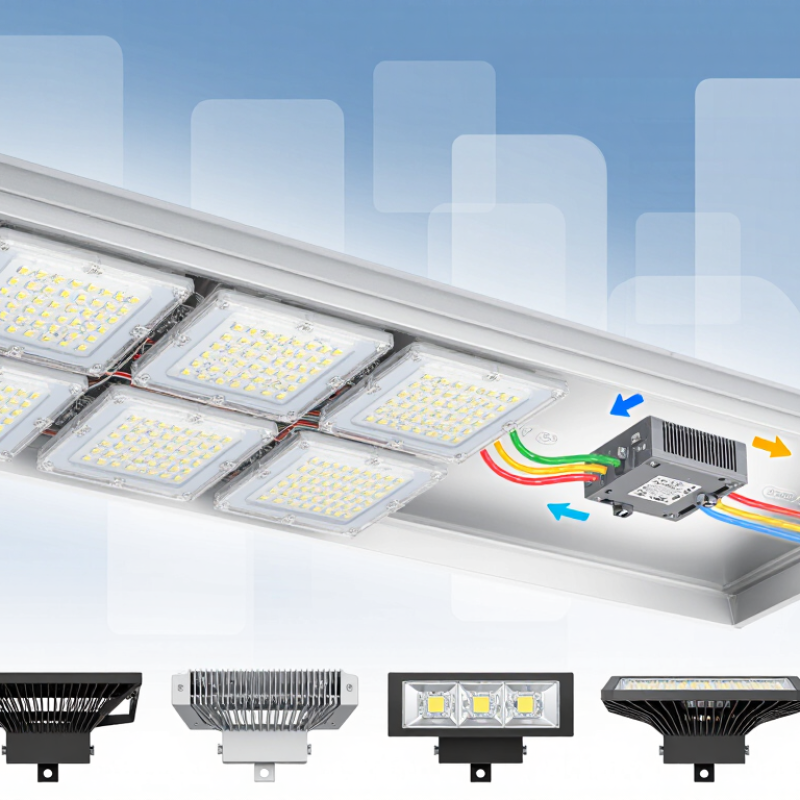
To tell whether an LED flood light has a built-in or external driver, start with its label and installation guide. Look for terms such as “integrated driver,” “constant current,” or a specified input range. A fixture marked for direct connection to mains power often contains its driver inside the housing. Still, wording varies, so check the wiring diagram rather than relying on one phrase.

The shape can offer clues. A compact flood light with one cable and no separate box usually has an internal driver. An external driver is often a distinct rectangular unit between the fixture and power supply, with its own label and input/output wires. Check near the mounting bracket and cable entry. Some drivers sit inside junction boxes, so they may not be visible at a glance. Turn off power before inspecting wiring; do not open a sealed fixture just to confirm its design.

If the label is missing, note the number of wires and any separate component, then compare these details with the manufacturer’s documentation or ask a qualified electrician. A dimmer, sensor, or replacement driver can complicate identification. I have seen similar-looking fixtures use different wiring arrangements, which makes visual guesses unreliable. That part is easy to overlook. Never connect an unknown driver by matching wire colors alone; verify its voltage and current specifications first.

How to Match a Driver to the Light’s Voltage and Power Needs

Matching a driver starts with the LED floodlight’s electrical specifications, not its appearance. Check whether the light requires constant voltage, such as 24 volts, or constant current, such as 700 milliamps. These systems are not interchangeable. A mismatch can cause flickering, poor output, or premature failure. Read the fixture label and technical sheet carefully; if either omits the required input, ask the supplier before connecting anything.

Next, compare the driver’s output voltage and current with the light’s stated range. Its rated power must also support the fixture’s load. A 50-watt light needs a driver rated for at least that load, with suitable operating headroom. More power is not automatically better. The output must still match the LED’s electrical requirements. Numbers matter.

It is tempting to match watts alone, but that shortcut can fail. Also check dimming compatibility, wiring, and the driver’s temperature rating. Outdoor floodlights may sit in hot, enclosed housings, where heat affects component life. Leave room for cooling. One detail is easy to miss: long cable runs can create voltage drop, especially with low-voltage systems. Confirm the driver’s location and cable length against its specifications. If the values seem inconsistent, pause and verify them rather than relying on a guess.

FAQS

Why do LED flood lights need different drivers?

Their electrical designs vary. Some contain built-in drivers, while others require separate units. A mismatch can cause flickering, overheating, or early failure.

Should I match a driver by wattage alone?

No. Match its rated current and voltage to the LED specifications. Wattage alone is not enough. A similar-looking unit may behave differently.

What is the difference between constant-current and constant-voltage drivers?

Constant-current drivers regulate current for LED arrays requiring a controlled current. Constant-voltage drivers provide a fixed voltage. They are not interchangeable.

How can I identify a built-in driver?

Check the label, installation guide, and wiring diagram. A compact fixture with one cable often has an internal driver. Often, but not always.

What does an external driver look like?

It is usually a separate rectangular unit between the fixture and power supply. Look for its own label, input wires, and output wires near the cable entry.

Can I inspect the fixture to confirm its driver type?

Turn off power before checking visible wiring. Do not open a sealed outdoor fixture just to investigate. Some drivers hide inside junction boxes.

Why does a driver help protect LED components?

It controls current when incoming power changes or LED temperature rises. This helps limit overheating and excessive current through individual components.

Is a warm flood light housing normal?

A warm housing after one hour can be normal. A sudden brightness drop or repeated flickering deserves attention. Heat is a warning sometimes.

Can any dimmer work with any LED driver?

No. The dimmer and driver must be compatible. Both may support dimming but still perform poorly together. Testing information matters.

What should I do when the electrical ratings are unclear?

Pause installation and check the technical documentation. Ask a qualified electrician when wiring conditions remain uncertain. Wire colors alone are unreliable.

Conclusion

Some LED flood lights can connect directly to mains power, while others need a separate or built-in driver because their electrical requirements differ. LEDs operate on controlled direct current, whereas household mains electricity is typically alternating current at a higher voltage. A driver converts the supply into a suitable form and regulates current, helping protect LED components from excessive or unstable electrical flow.

To determine whether a flood light needs an external driver, check its specifications and wiring details for an integrated driver or a required input voltage and current. When selecting a compatible driver, match its output voltage and power capacity to the light’s requirements, and ensure the current rating is appropriate. Understanding why do some LED flood lights require a driver helps ensure the light receives stable power and operates reliably.

Liam

Liam

Liam is a dedicated marketing professional with a profound expertise in the industry, where he excels at highlighting the unique advantages of our core products. With a keen understanding of market trends and consumer needs, Liam frequently updates our company’s professional blog, providing......